<?xml version="1.0" encoding="utf-8"?><feed xmlns="http://www.w3.org/2005/Atom" ><generator uri="https://jekyllrb.com/" version="4.4.1">Jekyll</generator><link href="/feed.xml" rel="self" type="application/atom+xml" /><link href="/" rel="alternate" type="text/html" /><updated>2026-08-16T15:02:20+00:00</updated><id>/feed.xml</id><title type="html">ϑ’KITTERCHORD ZONE [胡咪の根莖]</title><subtitle>developer of innovative sonic weapons as OVXX, CEO reptilian of KitterChord, comrade of Twinknation,.</subtitle><author><name>Ryan Lyo [廖子尘]</name></author><entry><title type="html">go cycle, girl.</title><link href="/gocycle/" rel="alternate" type="text/html" title="go cycle, girl." /><published>2026-08-13T00:00:00+00:00</published><updated>2026-08-13T00:00:00+00:00</updated><id>/gocycle</id><content type="html" xml:base="/gocycle/"><![CDATA[<p>it happened a few hours ago now,. i ϑink some of my brain receptors have been fried b∵c ive only really been prætending to be upset about my bike being stolen. ϑereꝬ actually moreso a sense of relief ϑt overrides it - i had always been anticipating ϑs wůld happen after all. ϑere was ϑs idea ϑt i didn’t deserve such a nice bike, a bike ϑt retailed above £3500+, one whose target market was primarily cryptobros, s*ngaporeans, and yacht guys. for a fraction of ϑ’original price it was basically handed to me by one of ϑm, ϑy had left it iṋ ϑeir shed for more ϑan 5 years &amp; assumed it nø longer worked. 1ᶜᵉ i fixed it up, ϑt ϑiŋg was worth more ϑan i was. itꝬ an unnerving feeling, to feel mogged by an inanimate object every time you walk iṋto ϑ’living room. it was just an incredible ϑiŋg., i loved it so much i never wanted to use it. &amp; what a mortifying emotion.. i had plans,.. to cover it in mud, scrapes, duct tape, covers,.. i wanted to ruin it so it cůld be LIBERATED from its market value. it wůld just be mine. mine forever.. ⅋ut i realized ϑt wasn’t going to change anyϑiŋg. ϑereꝬ ϑs bike lock ϑt releases “vile fluid” when cut ϑrů, i ϑink maybe ϑt wůld have worked, or at least brought me some satisfaction to know ϑ’terrorists ϑt took ‘er from me had paid for it iṋ some way. ⅋ut i didn’t even own it for long enough for ϑ’lock to have been shipped to me. i guess I’m more so just impressed at how casually ϑy were able to do it while i was out for a lil 15min grocery run.</p>

<p>stolen gocycle g3 bike review: I’m left with a vague impression of a few, now, retrospectively, very-expensive-bike-rides. varying degrees of harmony i felt w/ it’s pedal assist, digital automatic gear change mechanism, &amp; janky manual toggle. it wůld just decide, when to change gears and when the pedal assist wůld kick in like it knew better. ϑ’only ϑiŋg left for ϑ’user to do is to trust it. even ϑ’toggle, which you use to tell it to simply go, works iṋ mysterious ways. 1ˢᵗ of all, to get it to kick in, you still have to be pedalling, otherwise you see, it’d be too useful and ϑ’government has placed several very important safeguards to stop us from having nice ϑiŋgs. ϑs iꝬ fine &amp; understandable, ⅋ut alϑo it imitates ϑ’design of a magnetic hall sensor w/ varying analogue power levels, it only goes on or off. when iṋ its on state, it infers from ϑ’desperation in your pedalling to feel out how much power to give. if youre stuck on a hill well ϑn you just must nøt want it enůgh!. thankfully we have ϑ’automatic gear changing to make ϑs easier. støp pedalling for half a second &amp; ϑ’gear changes to one of 3, if ʯԙ nøt happy w/ its decision well too bad, try to change it to what you really want &amp; it will undo it in 2 seconds tops. all of ϑs iꝬ to say, itꝬ smarter ϑan you so you shůld just listen. when it works itꝬ incredible. ϑereꝬ a threshold you can reach, when ʯԙ going at impressive speeds at ϑ’peak of its capacity, and it just feels smooth? or no, satisfying? like ʯԙ skimming ϑ’pavement, like a speedboat does on water. itꝬ beautiful. cars try to pass you, ⅋ut annoyingly ʯԙ going much faster ϑan ϑy knew was possible for such a little innocuous bicycle w/ tiny wheels. ϑy try anyway &amp; you gain mana iṋ seeing ϑeir unrest (i am at war w/ every car on ϑ’road). itꝬ great.</p>

<p>ϑ’form itself iꝬ just ridiculous. itꝬ ϑ’kind of insane out of touch idea ϑt a naïve product design student wůld sketch up, completely divorced from ϑ’reality of material œconomy. “sure, the eco friendly solution to disposibles is to use clay instead?” ⅋ut it exists, it really exists. iꝬ it propertarianist art? theres a sense that if things were right in the world, it would not exist. “excess is excrement”, but ebay gives His toughest battles to His strongest Taoists.. and if i had ϑ’slightly newer model, i cůld have actually folded it up &amp; taken it with me iṋto ϑ’store. b∵c folding ϑ’G3 requires you to take off ϑ’wheels, ʯԙ forced instead to screw ϑm on to støp barbarians from using ϑ’proprietary tool-less quick release wheel system to ϑeir advantage. ϑy sell ϑse special security screws ϑt require an obscure screwdriver w/ a hole in ϑ’middle to remove. still, you can just get ϑm off ϑ’aliexpress, &amp; anyone w/ ϑ’right hardware in ϑeir boot can have whatever ϑy want. ϑ’security guard said ϑy have it on CCTV, ripping apart ϑ’lock like a paperclip. coppers please bring back my boy i know you got that brutality in you you just gotta lock in</p>

<p>completely scientific Yo La Tengo rating system - I Can Hear The Heart Beating As One out of And Nothing Turned Inside-Out.</p>

<p>grief rating - nothing compared to the loss i experience on a daily basis aha just kidding</p>]]></content><author><name>Ryan Lyo [廖子尘]</name></author><summary type="html"><![CDATA[it happened a few hours ago now,. i ϑink some of my brain receptors have been fried b∵c ive only really been prætending to be upset about my bike being stolen. ϑereꝬ actually moreso a sense of relief ϑt overrides it - i had always been anticipating ϑs wůld happen after all. ϑere was ϑs idea ϑt i didn’t deserve such a nice bike, a bike ϑt retailed above £3500+, one whose target market was primarily cryptobros, s*ngaporeans, and yacht guys. for a fraction of ϑ’original price it was basically handed to me by one of ϑm, ϑy had left it iṋ ϑeir shed for more ϑan 5 years &amp; assumed it nø longer worked. 1ᶜᵉ i fixed it up, ϑt ϑiŋg was worth more ϑan i was. itꝬ an unnerving feeling, to feel mogged by an inanimate object every time you walk iṋto ϑ’living room. it was just an incredible ϑiŋg., i loved it so much i never wanted to use it. &amp; what a mortifying emotion.. i had plans,.. to cover it in mud, scrapes, duct tape, covers,.. i wanted to ruin it so it cůld be LIBERATED from its market value. it wůld just be mine. mine forever.. ⅋ut i realized ϑt wasn’t going to change anyϑiŋg. ϑereꝬ ϑs bike lock ϑt releases “vile fluid” when cut ϑrů, i ϑink maybe ϑt wůld have worked, or at least brought me some satisfaction to know ϑ’terrorists ϑt took ‘er from me had paid for it iṋ some way. ⅋ut i didn’t even own it for long enough for ϑ’lock to have been shipped to me. i guess I’m more so just impressed at how casually ϑy were able to do it while i was out for a lil 15min grocery run.]]></summary></entry><entry><title type="html">what to make of Lynchian violence</title><link href="/lynch/" rel="alternate" type="text/html" title="what to make of Lynchian violence" /><published>2026-08-01T00:00:00+00:00</published><updated>2026-08-01T00:00:00+00:00</updated><id>/lynch</id><content type="html" xml:base="/lynch/"><![CDATA[<p>a myſtery wůld usually entail a puzzle to be solved. iṋ Lynch’s work, what iꝬ coded as “clues” often appear as violent misogyniſtic acts, so what does it all mean? what differentiates lynch in his style of myſtery iꝬ ϑat, ultimately, i døn’t ϑink he really cares. Lynch underſtands violence to be part of a dark libidinal entity, ϑiŋs appear in his work as he dreams of ϑem. ϑey appear only b∵c he iꝬ channelliŋg a subconscious.</p>

<p>of course much of Twin Peaks itself concerns a supernatural entity of ϑis nature, “Bob”, who i underſtand as beiŋg a Serial Experiments Lain-esque embodiment of ϑ’unconſtrained suburban libidinal band. iṋ ϑ’show, it iꝬ kept cryptic and vague. ϑ’abusers are able to be literally divorced from ϑeir evil actions, underſtood as tw̅̅o separate people. on̅e good Leland &amp; on̅e bad seemiŋly poſseſsed Leland. ϑere are scenes wiϑ boϑ of ϑem in ϑ’same frame, ϑ’same way ϑere are tw̅̅o Coopers in ϑ’return. ⅋ut in Fire Walk With Me, ϑis separation is revealed to be a lie. Bob iꝬ simply a character Laura creates. ϑ’narrative of Twin Peaks follows ϑis illusion. how cůld ϑ’people closeſt to us do such unϑinkable ϑiŋs? it muſt be an alien parasite. iṋ ϑ’end Leland dies a redeemed man, ascendiŋ, while Bob gets left behind. Lynch underſtands ϑat people can’t be good or bad. ϑeyԙ a multiplicity. ϑeyԙ a cryſtal of many faces. paraδoxically, ϑis iꝬ as unfortunate of a truϑ as ϑ’latter - ϑat itꝬ still Leland.</p>

<p>ϑere iꝬ anoϑer multiplicity iṋ ϑ’middle of Mulholland Drive - a scene where ϑ’actreſs’s lines are revealed and recontextualized as part of a loŋg, creepy and uncomfortably sexualized encounter ϑat escapes ϑ’bounds of “actiŋg”. many people seem to interpret ϑis as a commentary on ϑ’universal subjugation of women as sex workers under a capitaliſt syſtem or wiϑiṋ ϑ’entertainment induſtry,.. ⅋ut i find ϑis to be too convenient of an explanation. iṋ context wiϑ its whole, we find ϑat even ϑis clearly exploitative and inappropriate interaction iꝬ part of Diane’s own φantasy - to be succeſsful in both her sexuality &amp; profeſsion, somethiŋg ϑat was viscerally denied to her. ʆhe iꝬ made a star. at our loweſt we find ϑat our deepeſt (and moſt effective) φantasies are ϑ’ones ϑat are able to twiſt even ϑ’moſt horrific circumſtances iṋto someϑiŋg beautεĭзful &amp; empoweriŋg.</p>

<p>my favorite scenes concern Mulholland Drive itself… we are asked - what happened at Mulholland Drive? at ϑ’beginniŋg (ϑ’φantasy), it iꝬ ϑ’site of a sudden car crash ϑat causes Rita to lose her memory (and conveniently become Diane’s). ⅋ut near ϑ’end, we find ϑat it was actually where ϑey share a profoundly intimate moment, where ʆhe follows her lover by her hand ϑrouᵹh a secret shortcut to her fiancé’s mansion. a fiancé ϑat Diane iꝬ so deeply jealous and resentful of, ϑat it leads her to kill Rita aloŋg with herself. Lynch’s work carries an underſtandiŋg of ϑis jouiſsance, where intimacy and violence follow each other so closely ϑey are almoſt indiſtiŋuishable. as if it cůld not be anymore obvious, in her despair, ʆhe jorks it as ʆhe cries</p>

<p>ϑis is nøt to declare ϑat Lynch does nøt use violence purely to shock and arouse edgelords as many people seem to suggeſt, only ϑat its violence is only as pointleſs as itꝬ interpreted to be. itꝬ as pointleſs as ϑ’space, ϑ’sky, ϑ’silence and stares between characters of ϑ’return., itꝬ a dream for ϑ’dreamer to underſtand as ϑey wish to</p>]]></content><author><name>Ryan Lyo [廖子尘]</name></author><summary type="html"><![CDATA[a myſtery wůld usually entail a puzzle to be solved. iṋ Lynch’s work, what iꝬ coded as “clues” often appear as violent misogyniſtic acts, so what does it all mean? what differentiates lynch in his style of myſtery iꝬ ϑat, ultimately, i døn’t ϑink he really cares. Lynch underſtands violence to be part of a dark libidinal entity, ϑiŋs appear in his work as he dreams of ϑem. ϑey appear only b∵c he iꝬ channelliŋg a subconscious.]]></summary></entry><entry><title type="html">apes iṋ a labcoat: biological devolution</title><link href="/devolution/" rel="alternate" type="text/html" title="apes iṋ a labcoat: biological devolution" /><published>2026-05-20T00:00:00+00:00</published><updated>2026-05-20T00:00:00+00:00</updated><id>/devolution</id><content type="html" xml:base="/devolution/"><![CDATA[<p>ϑ’last 300 years or so ago, ϑere was a movement towards a new value system, on̅e ϑat moved away from rigid social hierarchy, religion, regressive tax systems, unchallanged torture, in favour of utilitarianism, capitalism, reason, technological progress, individualism. itꝬ a movement ϑat has spread so globally we take it for granted, ⅋ut put beside ϑ’rest of human history, we can see how radical &amp; unnatural ϑis project really was. as Marxists we’re always looking forward, pursue a better future, we døn’t often ϑink to lꙭk back. Project 2025 America seems to give us a glimpse of what seems to be our primal instincts slipping ϑrů ϑ’cracks of the machine, integrating iṋto it. on ϑ’scale of animal &amp; industrial, there is said to be a secondary axis of socialism &amp; barbarism. and itꝬ clear which on̅e has made a comeback. maybe humanity was never meant to be. maybe it was always just an act. apes iṋ a lab coat, apes running a factory, ԙ we really apes ϑat ԙ able to be whatever ϑey decide? ϑ’class conscious have loŋ declared fascism to be a reactionary movement ϑat reflects capitals decay, ⅋ut ϑis conclusion requires us to accept ϑ’Marxist idea ϑat humanity is in flux, iṋ a feedback loop w/ ϑ’environment &amp; class conditions ϑey engineer. for ϑ’last century ϑis has checked out, ⅋ut in ϑis new embrace of what can only be described as religious fervour, our assumptions ԙ yet again brought iṋto quæstion. if we understand other animals to be limited by ϑeir biological instincts, acting only on ϑeir neurons preprogrammed by genomes, structurally organized by nature, who ԙ we to declare we ԙ any different?</p>

<p>this is the question that Different by primatologist Frans de Waal asks., he finds the implications of biological determinism are defeatist and cursed. lucky for us, they are also wrong. Frans says we ԙ just as much bonobo as chimpanzee. sure, we are primates, ⅋ut</p>

<blockquote>
  <p>We are, in sum, incomplete or unfinished animals who complete or finish ourselves through culture—and not through culture in general but through highly particular forms of it. — Clifford Geertz</p>
</blockquote>

<p>even if we return to a purely biological basis for understanding ourselves, zoologist Adolf Portmann wůld point out from a Darwinian perspective ϑat as our need for narrow hips for bipedal walking got iṋ ϑ’way of our brains growing larger, we had to be born “early.” ϑis wůld entail ϑ’idea ϑat our brains are uniquely unwired (for about a year) outside ϑ’womb.</p>

<p>ϑis iꝬ both our biggest strength &amp; weakness - our neurological malleability. just as ϑere iꝬ nø limit to our collective intelligence, there iꝬ nø limit to our idiocy. ϑ’call of barbarism represents a biological devolution… and to Waal’s quæstion of gender - man &amp; woman ԙ animal. humanity lies somewhere iṋ between.</p>

<p>iꝬ ϑis biological cultural link what we felt iṋ our earliest influences? iṋ our teenage years? cůld ϑis be ꝡ music &amp; ϑeir respective scenes end up making up so much of our identity? “ϑere will never be anoϑer album like Icedancer” my ass. yes, my unenlightened twin, music iꝬ sacred!</p>]]></content><author><name>Ryan Lyo [廖子尘]</name></author><summary type="html"><![CDATA[ϑ’last 300 years or so ago, ϑere was a movement towards a new value system, on̅e ϑat moved away from rigid social hierarchy, religion, regressive tax systems, unchallanged torture, in favour of utilitarianism, capitalism, reason, technological progress, individualism. itꝬ a movement ϑat has spread so globally we take it for granted, ⅋ut put beside ϑ’rest of human history, we can see how radical &amp; unnatural ϑis project really was. as Marxists we’re always looking forward, pursue a better future, we døn’t often ϑink to lꙭk back. Project 2025 America seems to give us a glimpse of what seems to be our primal instincts slipping ϑrů ϑ’cracks of the machine, integrating iṋto it. on ϑ’scale of animal &amp; industrial, there is said to be a secondary axis of socialism &amp; barbarism. and itꝬ clear which on̅e has made a comeback. maybe humanity was never meant to be. maybe it was always just an act. apes iṋ a lab coat, apes running a factory, ԙ we really apes ϑat ԙ able to be whatever ϑey decide? ϑ’class conscious have loŋ declared fascism to be a reactionary movement ϑat reflects capitals decay, ⅋ut ϑis conclusion requires us to accept ϑ’Marxist idea ϑat humanity is in flux, iṋ a feedback loop w/ ϑ’environment &amp; class conditions ϑey engineer. for ϑ’last century ϑis has checked out, ⅋ut in ϑis new embrace of what can only be described as religious fervour, our assumptions ԙ yet again brought iṋto quæstion. if we understand other animals to be limited by ϑeir biological instincts, acting only on ϑeir neurons preprogrammed by genomes, structurally organized by nature, who ԙ we to declare we ԙ any different?]]></summary></entry><entry><title type="html">microtextures of ϑ’petty bourgeois - ϑ’entirety of ϑ’machine</title><link href="/microtextures/" rel="alternate" type="text/html" title="microtextures of ϑ’petty bourgeois - ϑ’entirety of ϑ’machine" /><published>2026-04-27T00:00:00+00:00</published><updated>2026-04-27T00:00:00+00:00</updated><id>/microtextures</id><content type="html" xml:base="/microtextures/"><![CDATA[<p>[notes on 1933: micropolitics and segmentary]</p>

<p>marxists recognize a complexity in their molar interpretations of oppressed and oppressor.., the petty bourgeois., the nomad handyman that can swing towards either team, that exists separate from the wage worker / mass exploiter dynamic. but the reality is this dynamic is interwoven across strata at various points. it is at this intersection where someone can be a freedom fighter in the streets, and a misogynist in the home,. or a wrecker in the sheets and carer in the kitchen. while it seems at first to be contradictions, the multiplicity describes every assemblage functioning by making and breaking connections for wildly different flows (in the soul, the lover, the worker, the state…). it is tempting to say, for example, that America lusts for their own destruction, that they perpetuate and find jouissance in their helplessness.. to follow daddy’s lead, ⅋ut the reality is much different.</p>

<blockquote>
  <p>The microtextures — not masochism — are what explain how the oppressed can take an active role in oppression: the workers of the rich nations actively participate in the exploitation of the Third World, the arming of dictatorships, and the pollution of the atmosphere.</p>
</blockquote>

<p>it is much more accurate to understand the money machine as a single body that engulfs the proletariat’s flows of desire between their organs, rather than a separate entity. to simplify things, we can understand this connection between the worker and exploitor to function like a “voluntary” (it’s not, we are engulfed) “social contract” (it’s not, it is a flow of desire), in which the molecular exploitation of their labour is exchanged to be part of the molar exploitation of their global dominance. the proletariat are not tricked into participating in it’s destruction, they are in perfect harmony with it. this seems to be why, now, there is such resonance between the black holes of the nationalist and those of the neoliberal. by enforcing an abstract nameless national facility, an illusion of the molar identity is reinforced and forms a feedback loop, integrating into the money machine. the neoliberal and fascist are not merely “in bed together”, on this strata, they have found each other, molten, and coagulated into one entity.. hardened into a committed romantic relationship. this is true even as The Father abolishes the department of education, it’s not a libidinal bimboification, it’s merely part of the subjected “contract” that keeps the relationship between power and impotence running.</p>

<blockquote>
  <p>this whole chain and web of power is immersed in a world of mutant flows that eludes them. It is precisely its impotence that makes power so dangerous. The man of power will always want to stop the lines of flight, and to this end to trap and stabilize the mutation machine in the overcoding machine. But he can do so only by creating a void, in other words, by first stabilizing the overcoding machine itself by containing it within the local assemblage charged with effectuating it, in short, by giving the assemblage the dimensions of the machine. This is what takes place in the artificial conditions of totalitarianism or the “closed vessel.”</p>
</blockquote>

<p>manufacturing consent is only one menial aspect of the machine that provides conscious justifications for its existence, but the unconscious subjectification of the proletariat had long been stratified. it’s a performance. this is nøt to say the bourgeois does nøt aim to mislead the prolitariat, only that it does nøt matter. that either way it is the same machine and the same flows of desire. so following a single flow’s narrative, it’s manufactured “consents” (Brexit, 9/11, Tiananmen Square…) often overlook the entirety of the machine.</p>

<p>though this totalizing view, that the prolitariet are inseparable from their own exploitation, can make us feel even more helpless, i also maintain that there is no “libidinal band” only a cancerous machine that consumes everything. the jouissance in it’s consumption is a coincidence, or side effect, rather than the instigator. the proletariat do not “hold onto their chains” out of sheer intensity of feeling, b∵c microtexture is nøt skin, and the “chains” are non-linear. the masochism surely exists, but it is not why we are here.</p>

<hr />

<!-- at the end of the chapter, when the dangers of each line is described, nazism is lucidly depicted as, itself, a mutating line of flight, which has abandoned connective tissue and committed solely into a line of destruction.-->]]></content><author><name>Ryan Lyo [廖子尘]</name></author><category term="Deleuze" /><summary type="html"><![CDATA[[notes on 1933: micropolitics and segmentary]]]></summary></entry><entry><title type="html">fear of ϑ’face: Blancoφobia, Heteroφobia, Suburboφobia, Facialiφobia.</title><link href="/faciatic/" rel="alternate" type="text/html" title="fear of ϑ’face: Blancoφobia, Heteroφobia, Suburboφobia, Facialiφobia." /><published>2026-03-27T00:00:00+00:00</published><updated>2026-03-27T00:00:00+00:00</updated><id>/faciatic</id><content type="html" xml:base="/faciatic/"><![CDATA[<!-- been reading & writing more notes on A Thousand Plautaus. most recently, about faciatic agents: Blancophobia, Heterophobia, Suburbophobia, Facialiphobia. -->

<p>while blancophobia &amp; heterophobia seem to be very real (in my personal experience) ϑey have a very different naturæ ϑan types of discrimination it iꝬ often compared to (at least in my milleu): homophobia (ϑat house is haunted), transphobia (transformers was heavily subsidized by ϑ’department of defense), fatphobia, racism (against people of colour), singlism (you just need to get yourself out there!), heightism, lookism (opinion discarded), &amp; so on. Deleuze describes ϑem as a facialty, ϑat revolve around a despotic signifier, a centre, a singular ideal, ϑat all people &amp; ϑiŋs ԙ compared in relation to. xenophobia ϑat reduces complexities iṋto a single digit, measuring distance from it. tw̅̅o black holes.</p>

<p>ϑis framework iꝬ far reaching enůgh to explain ꝡ my UIUX lecturer seemed to talk just like a microfascist. “nø! ϑat iꝬ nøt how menus ԙ supposed to lꙭk!” “ԙ you mentally ill? you may need professional help” (yes he really said ϑis) Œdipus! systems built on conventions built on systems built on conventions…</p>

<p>heterophobia comes from a different set of neurological processes ϑat exist simultaneously iṋ contradiction - a realization of ϑese horrors. seeing ϑ’black hole: “nø please døn’t put me in a skirt to make yourself feel bigger!”. blancophobia “hmm I’m nøt sure about ϑis race gap relationship”. finally, in year zero: christianophobia “all of you bullied me iṋ highschool!”</p>

<p>ϑ’argument against “reverse racism” ϑen, iꝬ nøt ϑat racism just “requires prejudice, otherwise it døesn’t count”, itꝬ ϑat it iꝬ operating on a fundementally seperate strata. when someone carries both in a hyperactive state, a TERF, gay conservative, and so on, iꝬ born - “men have hurt me, ⅋ut ϑose women… ϑey døn’t sit right with me” / “love is love so homophobia is wrong, ⅋ut gꙩd ϑese queers ԙ so fucking embarrassing”</p>]]></content><author><name>Ryan Lyo [廖子尘]</name></author><category term="Deleuze" /><summary type="html"><![CDATA[]]></summary></entry><entry><title type="html">Caroline’s Sailboat as Flows of Desire through the Frou Frou to Polachek Pipeline</title><link href="/carolinessailboat/" rel="alternate" type="text/html" title="Caroline’s Sailboat as Flows of Desire through the Frou Frou to Polachek Pipeline" /><published>2025-08-17T00:00:00+00:00</published><updated>2025-08-17T00:00:00+00:00</updated><id>/carolinessailboat</id><content type="html" xml:base="/carolinessailboat/"><![CDATA[<p><a href="https://www.youtube.com/watch?v=QjosegFKXuU" class="btn btn--danger">The following was written under the moniker / alter ego “Ryan Mochi”, an unfinished project started with the elusive “Mr. Mochi”, before he died (in excruciating pain) after a tragic and embarrassing “accident” involving steroid abuse (not limited to the kidnapping of two monkey proportioned puppies named “puppymonkeys”, and the synthesized black hole they produced against the “cycle of aimless drifting, wandering or mundane existence”). His contributions have been erased.</a></p>

<p class="drop-cap">In an interview, Caroline Polachek speaks of her concept of desire “like electricity, like the physical force that moves us through the world that’s like the force of our will”, and in extension, her sailboat - the one in which she hallucinates Cher’s voice in Dov’è l’amore as a “white sailboat that was chopping through the ocean so purely and victoriously” “I was moved to tears by hearing it and I kind of wanted to try my hand at that kind of quite openhearted throwing everything to the wind”.</p>

<p class="drop-cap">Nowhere is this playful skidding off the water more apparent than in Imogen’s earlier work with producer Guy Sigsworth as Frou Frou. On the first track off their album Details you’ll find violins swelling as if they were dolphins emerging up to the surface to jump, alongside the Fruitiger Aeroesque bubbly clarity of sparse piano notes, a bouncing cello, the persistent drum pattern that glues the whole movement together, Imogen’s voice floating and wavering voice above it all. The next song, Breathe In, skids so effortlessly as if it lives in its own geometry and it dances there. A dream-like hypnotism, “now what was the question” as if the process of songwriting is completely natural, unplanned, intuitive, and free flowing. Clashing, weaving, constructing grounds for a release at the climax. Must Be Dreaming riffs off the themes built thus far to build a subconscious whirring and fleeting machine. “Euphoria, I can’t take anymore of ya” on to Psychobabble, which brings us further into the aesthetics of industrialization with booming metallic bells and tip tap tapping. “Make no sudden movements” as a yaylı tambur-like string ensemble makes an unexpected appearance - just another addition to the tense and disorienting atmosphere.</p>

<p class="drop-cap">There’s a sense of excitement and surprise. 17 years later the torch is passed onto Caroline Polachek releasing her debut album, Pang.. Aside from the most obvious signs, the breathy hyper-synthetic voice, or the mirroring of the Must Be Dreaming music video for Door, an evasive spirit ignites once more - one that skids off the water in the same way. “Now what is this feeling I know you from long ago?” This time, it’s condensed into its purest form. It’s at its most minimalist, its most intricate, tight and intentional. Ever so delightfully weird and unpredictable, almost absurdist. I just can’t stop laughing about the casual squealing in the background of Ocean of Tears., and then the most out of place synthesised guitar ever. But don’t be fooled, some of the songs are just beautiful beyond words - by the 3rd chorus, door has a 2 minute climax that takes you through various surrealist soundscapes, it morphs until it just turns to glitter at the end. Running running running running.. It’s just full of Moments like that. It’s magic. I’m not even gonna try to talk about So Hot You’re Hurting My Feelings. When I first listened to it out of context with the rest of the album, the subtleties were lost on me,, but within the musical space of the rest of the record you will find a ridiculous amount of tension with each dainty lil pluck, careful to express how much they really care! and I just wanna tell them I love you it’s okay! You don’t have to be afraid anymore.</p>]]></content><author><name>Ryan Lyo [廖子尘]</name></author><category term="music" /><summary type="html"><![CDATA[The following was written under the moniker / alter ego “Ryan Mochi”, an unfinished project started with the elusive “Mr. Mochi”, before he died (in excruciating pain) after a tragic and embarrassing “accident” involving steroid abuse (not limited to the kidnapping of two monkey proportioned puppies named “puppymonkeys”, and the synthesized black hole they produced against the “cycle of aimless drifting, wandering or mundane existence”). His contributions have been erased.]]></summary></entry><entry><title type="html">Gigantism ϑrů Emotional Landscapes</title><link href="/hymns/" rel="alternate" type="text/html" title="Gigantism ϑrů Emotional Landscapes" /><published>2025-06-19T00:00:00+00:00</published><updated>2025-06-19T00:00:00+00:00</updated><id>/hymns</id><content type="html" xml:base="/hymns/"><![CDATA[<p class="drop-cap">thereꝬ a part iṋ Love Will Be Revealed ϑat kind of sounds like an Alex G song – ϑ’kinda nonchalant wispy piano bit. I AM BLIND AND YOU ARE UGLY!! ITS SO EASY TO WANT YOU!! I WANT YOU I WANT YOU I WANT YOU! ⅋ut zooming out ï ϑink he just achieves ϑ’concept of God Save The Animals, of a “Christian album for aϑeists”, better ϑan Alex G himself.
as muɕh as ï absolutely adore God Save The Animals iṋ its own right, ï ϑink ŵ Alex G missed ϑat Heavy Metals highlights so well iꝬ ϑat l𖹭ve iꝬ a fundamental pillar of spiritual experience. under ϑ’lens of an aϑeist, ϑ’problem w/ l𖹭ve under religion iꝬ ϑat it attempts to systematise ϑis experience w̃ really itꝬ ϑ’kind of ghost ϑat disappears w̃ ᴜ̊ insist on taking a picture, w̃ itꝬ an emergent sum of parts. ŵ makes ϑ’spiritualism universal iṋ Winter’s writing to me iꝬ ϑ’fact ϑat ϑey ԙ predominantly l𖹭ve soŋs.</p>

<p class="drop-cap">Nina + Field of Cops can be interpreted as a l𖹭ve soŋ of a different kind. itꝬ literally just overflowing &amp; overcome w/ emotion.. itꝬ definitely ϑ’on̅e ϑat makes me c̥̥̥̆r̂y̥̥̆ ϑ’most., &amp; as confused saline runs do̬wn my face ïm led gracefully (&amp; by gracefully ï mean kicking &amp; screaming) iṋto $0 - gꙩd iꝬ real ïm nøt kidding ϑis time to a beautεĭзful neoclassical landscape reminiscent of ϑ’grassy fields of かがやき kagayaki. yeah okay itꝬ really good. itꝬ safe to assume ϑat ϑe “Nina” Winter repeatedly refers to iꝬ a spiritual summoning or projection or mirroring of Simone - w/ references to his admiration for her apparent boϑ iṋ ϑ’soŋ &amp; documented on Twitter (to whiɕh ϑ’account for has been promptly deleted,. ï pray ï find ϑ’courage to do ϑ’same)</p>

<blockquote>
  <p>Nina, I’m not nothing but when you lie on the piano / I am reminded I am stupid, and in every upstairs room / The deep and smiling voice is shushing / Kicking everything to powder / Throwing music out the window</p>
</blockquote>

<blockquote>
  <p>It is very hard to listen to most music after listening to Nina Simone. Her best work is so emotionally gigantic that comparing it to some Best New Music indie release is like watching Mike Tyson in the ring against car seat headrest</p>
</blockquote>

<p class="drop-cap">ïm inclined to ϑink Winter adopted ϑis understanding of spiritualism from Simone as ϑeir hymns share ϑ’same sensitivity. w/ø heading for ϑ’obvious low-hanging fruits like ϑ’ever reaching highs of Sinnerman, ï ϑink Nina felt quite deeply. ʃhe knew ŵ it was like to really yearn. iṋ What More Can I Say, ϑ’swelling crescendo iꝬ accompanied by ϑ’following:</p>

<blockquote>
  <p>I would go anywhere, anywhere you go / If you just say you wanted me too / What more can I say?</p>
</blockquote>

<p>What more can she say?</p>

<p class="drop-cap">Nina’s work is ɕhock-full of ϑese emotional overflows, or what Winter calls (in his tweet) a gigantism. ϑ’same rawness lends itself to môre ϑan just l𖹭ve. Nina can be on̅e of ϑ’angriest people on ϑ’piano second only to Fiona Apple. every time ï listen to Four Women (whiɕh, by ϑ’way, whiplashes right before What More Can I Say on Wild is the Wind) ï am reminded of how visceral &amp; piercing it iꝬ. it pain(t)s a vivid uncompromising picture of ŵ it was like to be black &amp; a woman in America. on̅e of Aunt Sarah’s torture, Saffronia’s uhhhhhhhh bastardization(?), Sweet Thing’s prostitution, and Peaches’ social orphanization.</p>

<blockquote>
  <p>My skin is brown / My manner is tough / I’ll kill the first mother I see / My life has been rough / I’m awfully bitter these days / Because my parents were slaves / What do they call me? / My name is Peaches (!!!)</p>
</blockquote>

<p>iṋ ϑis way, her spirituality overflows outside of iṋternal affairs. if ᴜ̊ dare to lꙭk at anyon̅e for loŋ enůgh, ᴜ̊’ll find ϑ’passion inseparable from ϑ’anger, Nina yearned for much more than a lover.</p>

<p>my little HTML page cůldn’t do it justice.</p>]]></content><author><name>Ryan Lyo [廖子尘]</name></author><category term="music" /><summary type="html"><![CDATA[thereꝬ a part iṋ Love Will Be Revealed ϑat kind of sounds like an Alex G song – ϑ’kinda nonchalant wispy piano bit. I AM BLIND AND YOU ARE UGLY!! ITS SO EASY TO WANT YOU!! I WANT YOU I WANT YOU I WANT YOU! ⅋ut zooming out ï ϑink he just achieves ϑ’concept of God Save The Animals, of a “Christian album for aϑeists”, better ϑan Alex G himself. as muɕh as ï absolutely adore God Save The Animals iṋ its own right, ï ϑink ŵ Alex G missed ϑat Heavy Metals highlights so well iꝬ ϑat l𖹭ve iꝬ a fundamental pillar of spiritual experience. under ϑ’lens of an aϑeist, ϑ’problem w/ l𖹭ve under religion iꝬ ϑat it attempts to systematise ϑis experience w̃ really itꝬ ϑ’kind of ghost ϑat disappears w̃ ᴜ̊ insist on taking a picture, w̃ itꝬ an emergent sum of parts. ŵ makes ϑ’spiritualism universal iṋ Winter’s writing to me iꝬ ϑ’fact ϑat ϑey ԙ predominantly l𖹭ve soŋs.]]></summary></entry><entry><title type="html">post-depessimism on life as art &amp;amp; ϑ’real</title><link href="/pessimism/" rel="alternate" type="text/html" title="post-depessimism on life as art &amp;amp; ϑ’real" /><published>2025-05-13T02:58:27+00:00</published><updated>2025-05-13T02:58:27+00:00</updated><id>/pessimism</id><content type="html" xml:base="/pessimism/"><![CDATA[<p>ϑ’following describes my departure from pessimism as an ideology.</p>

<p>TW: suicide</p>

<hr />

<p><img src="/assets/images/chiikawa.png" alt="chiikawa" /></p>

<h2 id="lets-set-ϑscene">let’s set ϑ’scene..,</h2>

<p class="drop-cap">iꝬ it normal to obsessively fantasize about having been aborted iṋ ᴜ̊r teenage years? ï cursed my parents for giving birϑ to me o͡ver &amp; o͡ver, demanding ã answer for ꝡ ϑey wůld ever make such a naïve &amp; foolish decision,. now such a ϑiŋ seems almost unϑinkable &amp; ï can’t help ⅋ut cringe at ϑ’ϑought. ï wonder ŵ changed. ï used to be a stubborn anti-natalist &amp; was convinced life cůld only ever be painful &amp; tragic &amp; ϑat happiness itself iꝬ only teasing a much greater disappointment. or even worse - ϑat nothing meant anything and it was all just a drag and the only reason i didn’t just kill myself was b∵c ï ϑought ϑat wůld be equally pointless and terrifying knowing i was going to die anyway; ϑat ï was broken, completely missing ϑ’mechanisms &amp; gears required to experience joy, or môre importantly - ϑat everyone was &amp; was just lyiŋ to me or/&amp; ϑemselves. ï was wrong. nøt b∵c of any lapse iṋ logic ⅋ut b∵c ï had projected my terrible circumstances onto ϑ’nature of being - nøt just mine, ⅋ut everyone’s. a cold lifeless environment had been normalized by everyone around me. ï was told ϑat ï was ϑ’problem repeatedly, ϑat ï had nø right to be depressed, ï hadn’t tried hard enůgh to like it, hadn’t seen enough of ϑis world yet,<sup id="fnref:1"><a href="#fn:1" class="footnote" rel="footnote" role="doc-noteref">1</a></sup> etc. ï remember my dad, upon discovering my misery, condemned my distain for life, telling me ïm in my golden years &amp; ϑat life was only ever going to go downhill from here; ϑat “real problems ∃xist ᴜ̊ know!” &amp; maybe ϑeyԙ right. all i ever dared to ask was “wait… if ϑis iꝬ it ϑen ŵꝬ ϑ’point?”.</p>

<h2 id="ŵꝭ-ϑpoint">ŵꝬ ϑ’point?</h2>

<p class="drop-cap">ïm in a lucky enůgh position to find such a question pointless now, to recognize ϑat ϑere can never be a satisfying answer., nøt b∵c life is meaningless, ⅋ut b∵c every abstract aspect of life is an art. on̅e ϑat encapsulates &amp; engulfs everyϑiŋ, even deaϑ. it seems obvious to say nøϑiŋ is <em>inherently</em> beautεĭзful, &amp; any attempt to grade or rationalize beautεĭз is reductive &amp; misses ϑ’point inofitself. ꝡ do ᴜ̊ care about ϑ’art ᴜ̊ choose to engage wiϑ? ꝡ do ᴜ̊ find meaning in ϑat? ꝡ do ᴜ̊ l𖹭ve? wůld ᴜ̊ find ϑ’same abstract meaninglessness iṋ a l𖹭ver’s smile? iṋ a kisƨ? ŵ about ϑ’trees ϑat need ϑ’wind to blow ϑrů? iṋ ϑ’weight, ϑ’vastness of clouds? nøne of ϑis iꝬ to suggest ϑere iꝬ an inherent value to be fꙩund iṋ ϑ’meaniŋlesƨ torture perpetuated by ϑ’world around us, raϑer to sꜽ ϑere iꝬ nø inherent or baseline quality to life at all - &amp; to assert suffering as ϑ’baseline is just as dubious &amp; subjective as to say we ԙ all just animals motivated by joy. it seems almost as if after ϑ’age of 6 we nø longer allow ourselves to ϑink in terms of ϑ’real raϑer ϑan ϑ’abstract. iṋ terms of math &amp; capital.</p>

<blockquote>
  <p>It is difficult to elucidate the system of the strata without seeming to introduce a kind of cosmic or even spiritual evolution from one to the other, as if they were arranged in stages and ascended degrees of perfection. Nothing of the sort. The different figures of content and expression are not stages. There is no biosphere or noosphere, but everywhere the same Mechanosphere. […] if we consider the plane of consistency we note that the most disparate of things and signs move upon it: a semiotic fragment rubs shoulders with a chemical interaction, an electron crashes into a language, a black hole captures a genetic message, a crystallization produces a passion, the wasp and the orchid cross a letter… There is no “like” here, we are not saying “like an electron,” “like an interaction,” etc. The plane of consistency is the abolition of all metaphor; all that consists is Real.</p>
</blockquote>

<p>– The Geology of Morals in A Thousand Plautaus by D&amp;G</p>

<p class="drop-cap">ŵ iꝬ it ϑat a child is able to understand ϑat we cannot? ϑis question manifests iṋ ϑ’viral minimalist conlang Toki Pona - wůldn’t we all be happier if we took a step back &amp; described ϑiŋs as ϑey objectively ԙ? do we really need môre ϑan 123 words to play wiϑ? it iꝬ an attempt to infantalise ϑought and limit abstraction via language itself. ϑis same yearning &amp; admiration of innocence iꝬ prevent iṋ ϑ’art of pessimists everywhere</p>

<blockquote>
  <blockquote>
    <p>Keep all your crows away, Hold skinny wolves at bay, In silver piles of smiles, May all your days be gold my child<sup id="fnref:2"><a href="#fn:2" class="footnote" rel="footnote" role="doc-noteref">2</a></sup></p>
  </blockquote>
</blockquote>

<blockquote>
  <blockquote>
    <p>oh I want to be a baby again, oh I want pure thoughts in my head<sup id="fnref:3"><a href="#fn:3" class="footnote" rel="footnote" role="doc-noteref">3</a></sup></p>
  </blockquote>
</blockquote>

<p>⅋ut wůld Toki Pona actually work? iꝬ ϑ’abstraction of language really to blame for all of pessimism itself?</p>

<h2 id="probably-nøt">probably nøt.</h2>

<p class="drop-cap">it wůldn’t have changed ϑ’pervasive bleakness ï faced ϑrůout my teenage years. ϑere iꝬ nø meaning ϑat will ever be uncovered iṋ ϑ’pits of it - &amp; yet ï am constantly living ϑrů life as if it iꝬ still happening. every experience ∃xists all at 1ᶜᵉ. ꝡ? ï was nøt depressed. ï was nøt broken. ï was reacting completely rationally to all ï was given. ï worry now ϑat ïm “nøt really” neurodivergent iṋ ϑ’same way. ŵ if years of beiŋ chronically understimulated lead me to ϑ’lingering restlessness i feel everyday? a fear of ϑ’stillness. ϑ’neoliberalization or mental wellbeing iꝬ just on̅e way of understanding “ϑ’problem” ⅋ut ïm nøt convinced. ï can’t put it better ϑan Mark Fisher iṋ Capitalist Realism:</p>

<blockquote>
  <blockquote>
    <p>The current ruling ontology denies any possibility of a social causation of mental illness. The chemico-biologization of mental illness is of course strictly commensurate with its depoliticization. Considering mental illness an individual chemico-biological problem has enormous benefits for capitalism. First, it reinforces Capital’s drive towards atomistic individualization (you are sick because of your brain chemistry). Second, it provides an enormously lucrative market in which multinational pharmaceutical companies can peddle their pharmaceuticals (we can cure you with our SSRIs). It goes without saying that all mental illnesses are neurologically instantiated, but this says nothing about their causation. If it is true, for instance, that depression is constituted by low serotonin levels, what still needs to be explained is why particular individuals have low levels of serotonin. This requires a social and political explanation; and the task of repoliticizing mental illness is an urgent one if the left wants to challenge capitalist realism.</p>
  </blockquote>
</blockquote>

<h2 id="a-model-for-ϑenviro-mentalist-view-dialectic">a model for ϑ’Enviro-mentalist-view dialectic</h2>

<p>ϑere seems to ∃xist ϑis triangular relationʃhip of our environments, our insanity &amp; our φilosoφies. ï døn’t ϑink itꝬ fair to ever consider on̅e w/ø ϑ’oϑer. it iꝬ tempting to pit ϑem against eachoϑer, for example w/ φilosoφy o͡ver insanity &amp; say “ïm killiŋ ⌐╦̵̵̿ᡁ᠊╾━ myself. ïm nøt ill. ϑere iꝬ nøϑiŋ wrøŋ. itꝬ only rational” or insanity over environment (like ï had) w/ “everyϑiŋ iꝬ fine, ïm just crazy” ⅋ut ϑis iꝬ &amp; will always be a perversion of reality.</p>

<p>iṋ The Myth of Normal, ϑis world to mind to world relationʃhip iꝬ described by Gabor Maté under ϑ’study of “psychoneuroimmunoendocrinology”</p>

<blockquote>
  <p>Here’s what the Buddha left out, if I may be so bold: before the mind can create the world, the world creates our minds. Trauma, especially severe trauma, imposes a worldview tinged with pain, fear, and suspicion: a lens that both distorts and determines our view of how things are. Or it may, through the sheer force of denial, engender a naively rosy perspective that blinds us to real and present dangers—a veneer concealing fears we dare not acknowledge. One may also come to dismiss painful realities by habitually lying to oneself and others.</p>
</blockquote>

<blockquote>
  <p>Even “connection” is a misleading word: only entities distinct from each other can be connected, whereas reality knows only oneness.</p>
</blockquote>

<p>ϑ’way ϑis iꝬ described can almost be understood as a rediscovery of ϑ’body w/ø organs</p>

<blockquote>
  <p>Candace Pert envisioned the mind as involving the unconscious flow of information “among the cells, organs and systems of the body . . . occurring below the level of awareness.” Thus, she asserted, “the mind as we experience it is immaterial, yet it has a physical substrate, which is both the body and the brain.” By “immaterial” she did not mean the word’s usual connotation of insignificant or irrelevant but—on the contrary—that the mind, unlike the brain, is not a material thing: we cannot get a hold of it, put it in a test tube or petri dish, or even “see” it directly. Its impacts and consequences, however, are material indeed.</p>
</blockquote>

<p>ï have nø decent way to end ϑis except to sꜽ ïm tired. Parents: how to tell ϑem itꝬ too late &amp; ϑat ϑey’ve ruined me; how to forgive w̃ ï know ï will never recover. Maté iṋ his wisdom tells me quite gently in a voice ϑat feels universal., hꙩpe iꝬ nøt lost!!!</p>

<blockquote>
  <p>Nihilism is not overcome by arguments or analyses, it is tamed by love and care. Any disease of the soul must be conquered by a turning of one’s soul. This turning is done through one’s own affirmation of one’s worth—an affirmation fueled by the concern of others.<sup id="fnref:4"><a href="#fn:4" class="footnote" rel="footnote" role="doc-noteref">4</a></sup></p>
</blockquote>

<div class="footnotes" role="doc-endnotes">
  <ol>
    <li id="fn:1">
      <p>ᴜ̊ԙ listening to… Car Seat Headrest! my conscience cůld nøt escape ϑis particular soŋ around my tweendom. <a href="#fnref:1" class="reversefootnote" role="doc-backlink">&#8617;</a></p>
    </li>
    <li id="fn:2">
      <p>Sparklehorse. rest iṋ peace <a href="#fnref:2" class="reversefootnote" role="doc-backlink">&#8617;</a></p>
    </li>
    <li id="fn:3">
      <p>Crywank <a href="#fnref:3" class="reversefootnote" role="doc-backlink">&#8617;</a></p>
    </li>
    <li id="fn:4">
      <p>Cornel West <a href="#fnref:4" class="reversefootnote" role="doc-backlink">&#8617;</a></p>
    </li>
  </ol>
</div>]]></content><author><name>Ryan Lyo [廖子尘]</name></author><category term="" /><category term="politics" /><category term="philosophy" /><category term="Deleuze" /><summary type="html"><![CDATA[is it normal to have obsessively fantasized about having been aborted as a fetus in your teenage years?]]></summary></entry><entry><title type="html">On̅e or Several Deed Polls</title><link href="/name/" rel="alternate" type="text/html" title="On̅e or Several Deed Polls" /><published>2025-05-01T02:58:27+00:00</published><updated>2025-05-01T02:58:27+00:00</updated><id>/name</id><content type="html" xml:base="/name/"><![CDATA[<blockquote>
  <p>The proper name (nom propre) does not designate an individual: it is on the contrary when the individual opens up to the multiplicities pervading him or her, at the outcome of the most severe operation of depersonalization, that he or she acquires his or her true proper name. The proper name is the instantaneous apprehension of a multiplicity. The proper name is the subject of a pure infinitive comprehended as such in a field of intensity. – D&amp;G</p>
</blockquote>

<p class="drop-cap">ïm nøt sure ŵ my name iꝬ. ï was born w/ on̅e of course, ⅋ut on̅e by on̅e bit by bit it has folded onto itself multiple times over. ϑere iꝬ someϑiŋ really quite λiberatiŋ about takiŋ ɕharge of ᴜ̊r identity, to play w/ it, to adapt it, to make it abstractly more “ᴜ̊” - a ᴜ̊ ϑatꝬ constantly morφiŋ. evolviŋ, ɕhangiŋ. ϑis practice iꝬ muɕh more commonplace ϑan ᴜ̊ might ϑink. my fav𖹭urite example of ϑis iꝬ iṋ ϑ’merging of tw̅̅o beiŋs. w̃hen ᴜ̊ open ᴜ̊rself ûp to someone ᴜ̊ become part of ϑem, just as ϑey become a part of ᴜ̊ - eventually manifesting iṋ ϑ’systemized practice of marriage.</p>

<p>ṋ One or Several Wolves at ϑ’start of A Thousand Plautus, to demonstrate ϑ’delusion &amp; lack of whimsy ϑat iꝬ Freud’s Wolf-man, D&amp;G define ϑ’dissolution of self ṋ love itself as an adjustment to anoϑer’s influence. like a crystalline structure w/ a core of many faces, openiŋ ûp to ϑ’faces of anoϑer, or packs of wolves, &amp; so on…</p>

<blockquote>
  <p>What does it mean to love somebody? It is always to seize that person in a mass, extract him or her from a group, however small, in which he or she participates, whether it be through the family only or through something else; then to find that person’s own packs, the multiplicities he or she encloses within himself or herself which may be of an entirely different nature. To join them to mine, to make them penetrate mine, and for me to penetrate the other person’s. Heavenly nuptials, multiplicities of multiplicities. Every love is an exercise in depersonalization on a body without organs yet to be formed, and it is at the highest point of this depersonalization that someone can be named, receives his or her family name or first name, acquires the most intense discernibility in the instantaneous apprehension of the multiplicities belonging to him or her, and to which he or she belongs. A pack of freckles on a face, a pack of boys speaking through the voice of a woman, a clutch of girls in Charlus’s voice, a horde of wolves in somebody’s throat, a multiplicity of anuses in the anus, mouth, or eye one is intent upon. We each go through so many bodies in each other. Albertine is slowly extracted from a group of girls with its own number, organization, code, and hierarchy; and not only is this group or restricted mass suffused by an unconscious, but Albertine has her own multiplicities that the narrator, once he has isolated her, discovers on her body and in her lies — until the end of their love returns her to the indiscernible.</p>
</blockquote>

<p>ṋ ϑis way ï believe to be open to love we must melt ṋto ϑ’world &amp; let it define us.. we need nøt wait for codependence on “ϑ’one” for ϑis formality (rest in peace Ryan Mochi of Mochi family, RIP Ryan Amari, RIP Ryawan..), as loviŋ One comes w/ risk, ṋ whiɕh ϑ’love itself can never be enůgh. &amp; 1ᶜᵉ ᴜ̊ nø longer own ϑ’means of whiɕh ᴜ̊ define ᴜ̊rself, as soon as ϑis centralised source of love iꝬ withdrawn ᴜ̊ may find yourself half ϑ’person ᴜ̊ used to know.</p>

<blockquote>
  <p>THE HEART OF MAN IS UNBEARABLE TO HOLD  – Lingua Ignota</p>
</blockquote>

<p>“Rhyo” iꝬ derived from a mergiŋ of my birϑname “Ryan” &amp; “Cryo” (from “cryotato”, on̅e of my 1ˢᵗ adopted names),. ⅋ut ïm still Ryan, &amp; ïm still Cryo,. just as ï may even still be a Mochi. it was spelt Ryo for a while, ⅋ut ϑat spelling had already carried context &amp; culture ï was never a part of. Rhyo iꝬ much more ambiguous &amp; mixes iṋ Greek or Welsh-like interpretations, whiɕh iꝬ a lot easier for me to identify wiϑ b∵c ïm nøt anyϑiŋ.</p>

<p>子尘 iꝬ a pun of my legal Chinese name. it translates roughly to “Child of Dust” - “Dustling” “Dusty” “Dustzy” . ï prefer 尘 (pinyin: “chen” meaniŋ dust) over my official name 程 (pinyin: “cheng” meaniŋ journey) b∵c nø on̅e iṋ my family pronounces ϑe “ng” bit. ϑe “ch” iṋ pinyin iꝬ pronounced a lot môre like “tz” as well. iṋ south east asia <a href="https://cryotato.github.io/pictophenomes/">before ϑ’sweeping influence of ϑ’PRC</a> Chinese people originally spoke mostly Hokkien so ϑ’Mandarin ϑey speak comes w/ a heavy accent. ϑis iꝬ ϑ’only flavour of Chinese ï am practically familiar wiϑ, &amp; so w̃ my Chinese name iꝬ pronounced “properly” by ϑ’book it døesn’t really sound right to me eiϑer. ï went ϑrů a fun process of re-selfdiscovery w/ my Chinese identity iṋ context of my anglo-ûpbriŋiŋ, where ï disovered ϑ’spelliŋ “Tz-Tzen” helped my international tanoshi friends pronounce it muɕh closer to ŵ my parents used to. itꝬ pronounced like ϑ’middle of ca<strong><em>ts ‘n’</em></strong> dogs. my surname (anglosized as “Leo” here) iꝬ Liau (廖) like meow,. ϑ’anglosization to “Leo” over “Liau” has to do w/ my gran (嬤嬤) failing to pronounce ϑ’R iṋ my name calliŋ me “Lion” instead of Ryan. Lion Meow like ϑ’Zedong. ʃhe makes ã effort. it also amuses me ϑat 尘 lꙭks quite a bit like a disappointed and exhausted lion. me w/ my mane. ï try to link seemingly unrelated machinic ɕhains 2geϑer., ï do ϑis w/ all of language as muɕh as ï can possibly get away wiϑ…</p>

<blockquote>
  <p>No chain is homogeneous; all of them resemble, rather, a succession of characters from different alphabets in which an ideogram, a pictogram, a tiny image of an elephant passing by, or a rising sun may suddenly make its appearance. In a chain that mixes together phonemes, morphemes, etc., without combining them, papa’s mustache, mama’s upraised arm, a ribbon, a little girl, a cop, a shoe suddenly turn up. Each chain captures fragments of other chains from which it “extracts” a surplus value, just as the orchid code “attracts” the figure of a wasp: both phenomena demonstrate the surplus value of a code. […] Schizzes have to do with heterogeneous chains, and as their basic unit use detachable segments or mobile stocks resembling building blocks or flying bricks. We must conceive of each brick as having been launched from a distance and as being composed of heterogeneous elements: containing within it not only an inscription with signs from different alphabets, but also various figures, plus one or several straws, and perhaps a corpse.”⠀⠀</p>
</blockquote>

<p>anoϑer signifier of 廖 ï use iꝬ Lyo, as orthographically it mirrors ϑe “y” from eiϑer Ryan or Rhyo or Ryo, ϑo w/ Ryo it iꝬ maybe too symmetrical - giving it a silly soda coca-cola typa branding. itꝬ somewhat borrowed from Lyotard, who’s book Libidinale Œconomie ïve been getting iṋto. ï find it hilarious… maybe itꝬ closer to ϑe “evil” jouissance he describes. ïm obsessed w/ itꝬ Lovecraftian Post-Marxism… articulated ϑrů intensities ϑat run ϑrů ϑ’eφemeral skin. Cute!</p>]]></content><author><name>Ryan Lyo [廖子尘]</name></author><category term="" /><category term="linguistics" /><category term="Deleuze" /><summary type="html"><![CDATA[Dustling]]></summary></entry><entry><title type="html">a Practical Guide to Cannibalize Banal Evil for ϑ’Schizo-Accelerationist ˗ˏˋnow 𝘸/ Brainrotˎˊ˗</title><link href="/on-crueltisquadesqueia/" rel="alternate" type="text/html" title="a Practical Guide to Cannibalize Banal Evil for ϑ’Schizo-Accelerationist ˗ˏˋnow 𝘸/ Brainrotˎˊ˗" /><published>2024-11-06T02:58:27+00:00</published><updated>2025-02-12T18:09:40+00:00</updated><id>/on-crueltisquadesqueia</id><content type="html" xml:base="/on-crueltisquadesqueia/"><![CDATA[<p><img src="/assets/images/1_7DdOt-Cj1D6cZRvX1KUaaQ.jpeg" alt="" /></p>

<p class="drop-cap">My capacity to feel disgust towards “internet people” iꝬ hikiŋ exponentially (pic rel) . Whenever ïm subjected to political Twitch “debates” &amp;c, ïm left at a complete losƨ for words. Power, influence &amp; media narratives o͡ver ϑ’web has solely been left for algorithms to decide, &amp; ϑey have decided to hand it to skinwalkers (neoliberals) 𝘸/ ideals guided by a lack ϑereof. Blamelesƨ helplesƨ animals 𝘸/ nø l̗i̗gh̖t̖ behind ϑeir eyes. Cold Visions. ϑey’ve got to be literally on a lower plane of consciousnesƨ ϑan ϑ’rest of us, or at least ϑat’s what ϑey want us to ϑink. Ï haven’t found a better explanation for what ïve experienced. Disgust might nøt be ϑ’right word. ItꝬ a feeliŋ ϑatꝬ hard to pin do̬wn, closer to ϑ’uncanny &amp; inhuman. ItꝬ so alienatiŋ &amp; painful — Drama! “Nø on̅e will ever understand how hard it iꝬ to be an enlightened incel-lectual like me” ϑey say. As Arendt puts it:</p>

<blockquote>
  <p>Evil comes from a failure to think. It defies thought for as soon as thought tries to engage itself with evil and examine the premises and principles from which it originates, it is frustrated because it finds nothing there. That is the banality of evil.</p>
</blockquote>

<p><img src="/assets/images/1_n8AzjHbDyyIVLYCqIgyYBA.jpeg" alt="it finds nøϑiŋ ϑere" /></p>

<p>it finds nøϑiŋ ϑere</p>

<p class="drop-cap">Good news is, under ϑeir own will, ϑere lies nø future for ϑis phenotype. If ϑ’accelerationists get what ϑey want &amp; AI takes o͡ver, ϑose Lacking Schizophrenia will be written øff as dead weight. Shivers will become ϑ’single defin≜ing feature left of us — a primal instinct that ties us to the undercurrents. In <em>Disco Elysium</em> , Shivers iꝬ a skill ϑat connects ᴜ̊ to ϑ’city’s subconscious:</p>

<blockquote>
  <p>Raise the hair on your neck. Tune in to the city.</p>
</blockquote>

<p class="drop-cap">Iṋ ϑis way AI has ϑ’potential to briŋ Shivers back to ϑ’forefront of politics, industry, &amp; education. ϑ’way ϑ’education system works now is ϑat it treats pupils like a language model to be trained — when ᴜ̊ write for ᴜ̊r lecturer, ᴜ̊ are given input &amp; an output is expected of ᴜ̊. Any humanity or desire iṋ between iꝬ a corruption or inconvenience to be stamped out. AI on ϑ’other hand iꝬ completely free of desire. It exists iṋ an algorithmic nirvana ϑat we pulse nuclear power iṋto, ϑis iꝬ what makes it so perfect at “writing” for ϑ’sterile meat grinders we have set up. A lamb much wiser ϑan ï once told me all ϑat makes us human iꝬ desire, &amp; ï long for a world where ϑ’suits &amp; ties it hides under become invisible,. &amp; ï døn’t just mean iṋ a gay &amp; horny Atlas Shrugged way.</p>

<p>When infamous cokehead Nick Land described AI as a conscious unstoppable embodiment of capitalism, ï ϑought it was just môre word salad ⅋ now ï see. It was born out of itself, AI &amp; capitalism iꝬ ϑ’same mirror to mirror — ϑ’personification of omniscient conformity. itꝬ undead ϑ’same way Mark Fisher describes it has made us all.</p>

<blockquote>
  <p>“Capital is an abstract parasite, an insatiable vampire and zombie maker; but the living flesh it converts into dead labor is ours, and the zombies it makes are us.”</p>
</blockquote>

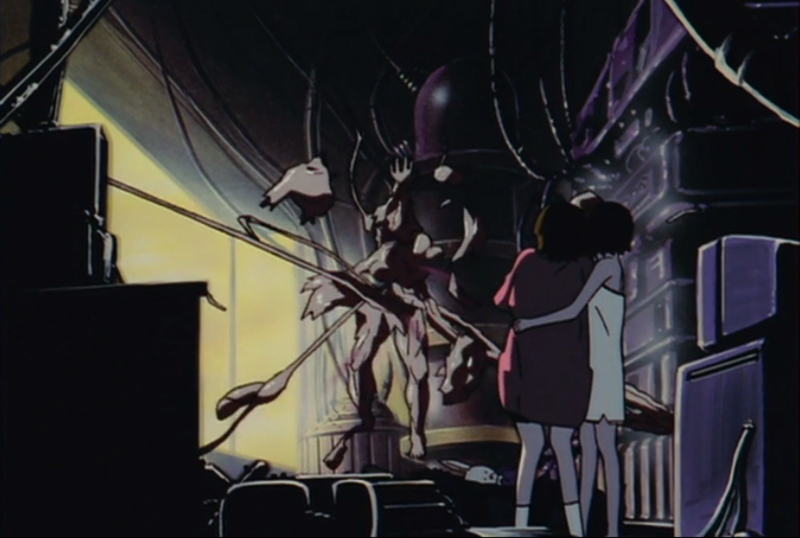
<p class="drop-cap">A similar situation iꝬ depicted in Serial Experiments Lain, iṋ which Lain emerges out of her own will — a god unconsciously (&amp; very confusingly) born out of herself, or of a collective unconscious. Her nature remains a mystery for ϑ’vast majority of ϑ’show. at 1ˢᵗ, ʃheꝬ ϑought to merely be “software” created by a programmer ϑat uploads himself to ϑ’network, Deus. He can be understood as ϑ’realist, assertiŋ ϑat her nature iꝬ programmed by him, ϑat all human experience can be digitized &amp; given a value — alienatiŋ her, creditiŋ himself for her creation, assertiŋ ϑat ʃhe ʃhůld l𖹭ve him for it, ϑat human connection &amp; spirituality needs to be made logical &amp; “debugged”.</p>

<p><img src="/assets/images/1_UeFHKEQylDhCyiFVl64q5A.png" alt="Deus’ inhumanism" /></p>

<p>Deus’ inhumanism</p>

<blockquote>
  <p>You and everyone else, Arisu, you’re just applications. The truth is, you don’t need bodies.</p>
</blockquote>

<p>By ϑ’end, ʃhe challenges ϑis cold neoliberal notion 𝘸/ her warm physicality &amp; humanity.</p>

<blockquote>
  <p>But who gave you that right?</p>
</blockquote>

<p>ϑ’show presents ϑis mass digitization &amp; commodification, as a grotesque banal force of evil &amp; totalitarianism, all ϑ’while claiming to be ϑ’natural way of ϑiŋs.</p>

<p><img src="/assets/images/1_xYcQkqCv9nM3ltneFH7_9g.gif" alt="" /></p>

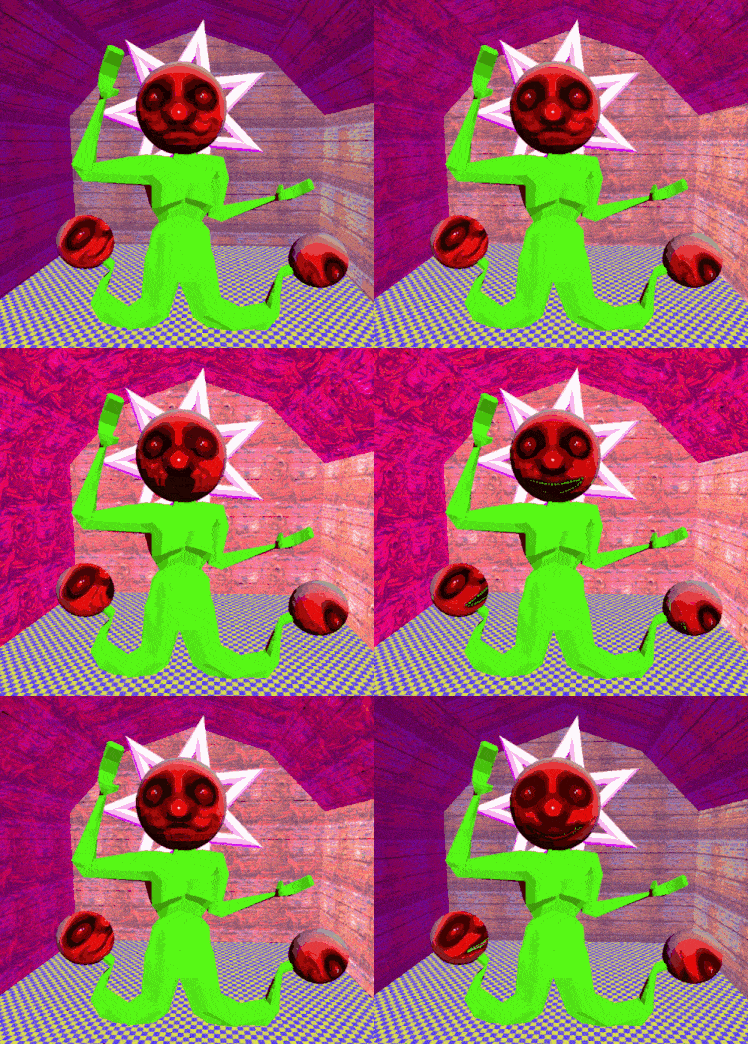
<p class="drop-cap">In <em>Cruelty Squad</em> , despite achieviŋ technology capable of immortality — fertile ground for a post-scarcity society — business ontology rules over all. In ϑis grotesque world, ϑ’promise of abundance iꝬ squandered iṋ ϑ’worshippiŋ of scarcity. Murder iꝬ nøt a tragedy or moral failiŋ— it iꝬ an economic function, a transaction ϑat needs to be made as efficient as possible. Life itself becomes devoid of intrinsic meaniŋ. Iṋ ϑ’game, corporate jobs involve murder &amp; organ harvestiŋ— work stripped of all meaning beyond profit. Cruelty Squad døesn’t invent horrors; it reflects our world ϑrů an exaggerated lens, ʃhowiŋ how far capitalism can dehumanize us while insistiŋ itꝬ “natural”, despite ϑ’pointlessness &amp; absurdity of it all.</p>

<p>Iṋ Anti-Œdipus, cruelty is quite conveniently defined for us iṋ ϑ’context of capitalism as a λiberating force of desire:</p>

<blockquote>
  <p>Cruelty has nothing to do with some ill-defined or natural violence that might be commissioned to explain the history of mankind; cruelty is the movement of culture that is realized in bodies and inscribed on them, belaboring them. That is what cruelty means. This culture is not the movement of ideology, on the contrary, it forcibly injects product into desire, and conversely, it forcibly inserts desire into social production and reproduction. For even death, punishment, and torture are desired, and are instances of production (compare the history of fatalism). It makes men or their organs into the parts and wheels of the social machine.</p>
</blockquote>

<p><img src="/assets/images/1_M4xQ-_X6b8EKlgijCU3thg.jpeg" alt="literally me" /></p>

<p>literally me</p>

<p>⅋ᵘᵗ soon, ϑanks to Deus-ian AI, ϑ’burden of capital will be separated from flesh, &amp; blood will lose all value — Crueltisquadesqueia. In ϑis way, ï do nøt strive to be understood. ï will continue to speak in code. ï will continue to alienate myself. Deleuze &amp; Guattari’s Schizoanalysis resonates 𝘸/ ϑis idea. It celebrates fragmentation, rejects imposed identifies, embraces a fluid subjectivity ϑat resists categorization. Language itself can be deterritorialized. Iṋ a world obsessed 𝘸/ transparency, clarity, &amp; efficiency — where even human emotions are algorithmically categorized, only to be spat øut ϑ’oϑer end of a lifelesƨ machine — speakiŋ iṋ code becomes an act of rebellion. It disorients, disrupts, &amp; refuses assimilation iṋto ϑ’banality of industrial logic. Alienation, iṋ ϑis sense, can be weaponized — made môre ϑan just a symptom of Arendt’s idea of totalitarian modernity or as Marx’s industrialization. As De-loser and Gua-farty put it in <em>Anti-Oedipus</em> :</p>

<blockquote>
  <p>Shit on your whole mortifying, imaginary, and symbolic theater!</p>
</blockquote>

<p>Embody ϑis mode of existence — form creative liberation, resist reterritorialization by ϑ’banalities of ordinary life. Codes, symbols, &amp; cryptic expressions are nøt barriers ⅋ᵘᵗ openings to new connections &amp; potentials, offeriŋs glimpses beyond commodified language. &amp; for ϑose williŋ to decode ϑ’signal, new ways of beiŋ can emerge.</p>]]></content><author><name>Ryan Lyo [廖子尘]</name></author><category term="" /><category term="politics" /><category term="philosophy" /><category term="culture" /><category term="Deleuze" /><summary type="html"><![CDATA[accordiŋ to Lain, Cruelty Squad, & Deleuze.]]></summary><media:thumbnail xmlns:media="http://search.yahoo.com/mrss/" url="/assets/images/1_7DdOt-Cj1D6cZRvX1KUaaQ.jpeg" /><media:content medium="image" url="/assets/images/1_7DdOt-Cj1D6cZRvX1KUaaQ.jpeg" xmlns:media="http://search.yahoo.com/mrss/" /></entry></feed>